
- By Best Solar Company PK
- 19 Aug, 2026
- Solar Policy
- 8 min read
Pakistan just crossed a milestone few policymakers saw coming. In FY2025, **distributed solar supplied close to 27% of all the electricity the country consumed** — around **51 TWh** that never showed up in the national grid's official numbers. This is the story of a record rooftop solar boom in Pakistan, what it means if you're planning to buy panels in 2026, and why it forced NEPRA to move fast on a net-billing crackdown.
For homeowners and businesses weighing a system today, this is not abstract policy. It changes your payback maths, your export rate, and how quickly you should act.
How distributed solar quietly took over 27% of the grid
According to analysis by Ember and the Pakistan Solar Association, distributed solar generation more than tripled in just two years — from about 15 TWh in FY2023 to roughly 51 TWh in FY2025. That lifted solar's share of electricity from around 10% to nearly 28%.
The scale is staggering. Pakistan added an estimated **27 GW of distributed solar in two years**, and operational PV capacity is now put near **51 GW**. In effect, rooftops absorbed almost all of the country's electricity demand growth on their own.
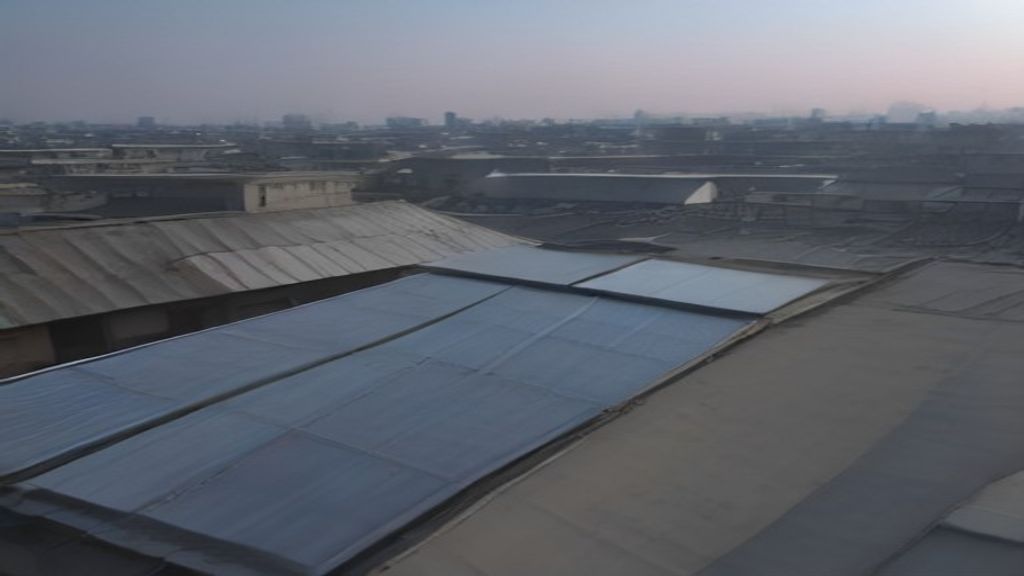
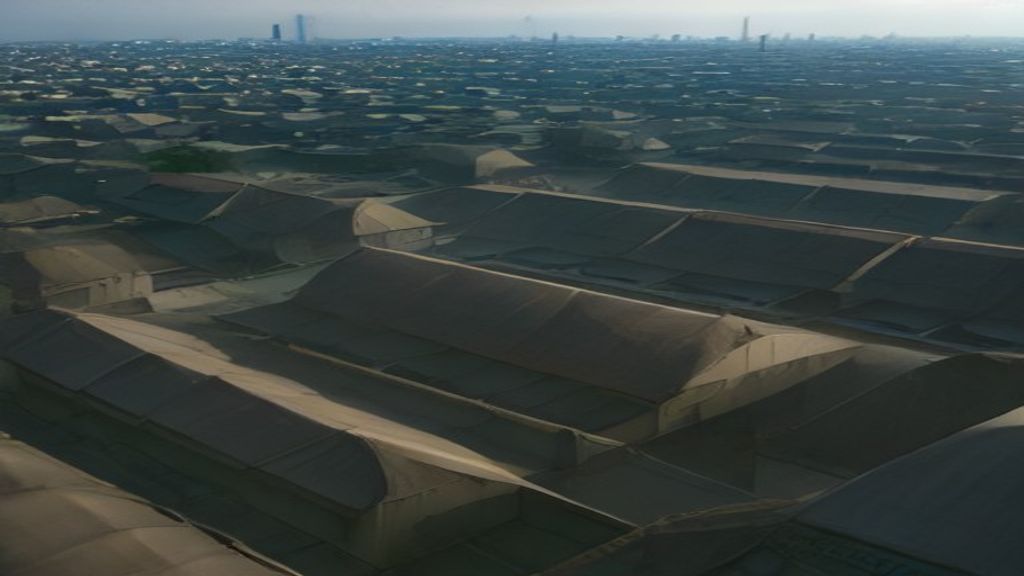
This is what analysts call the "invisible" grid. Because most of these panels sit behind the meter — on homes, factories, shops, and farms — the DISCOs (distribution companies) cannot see the power directly. They only infer it from a deepening midday "demand trough," when grid demand collapses as the sun peaks.
Pakistan didn't plan this transition. Households and businesses, crushed by rising tariffs, built it themselves — one rooftop at a time.
Why the boom happened: the economics were simply too good
The rooftop solar rush in Pakistan was driven by three forces:
- **Punishing grid tariffs.** Residential slabs and commercial rates climbed sharply, pushing many bills past Rs 50–70 per unit once fuel adjustments and taxes were added.
- **Collapsing panel prices.** Solar panel prices fell to roughly **Rs 25–40 per watt** in 2026, largely thanks to cheap Chinese modules flooding the market.
- **Generous old net metering.** Under the 2015 rules, prosumers could export surplus units and be credited at the full retail rate — often **Rs 22–27 per kWh**.
Put together, payback periods on a good on-grid system dropped to **2–4 years**, an almost unheard-of return in Pakistan.
What a system costs in 2026
Here's a realistic snapshot of installed prices for a quality system today. Figures vary by brand, inverter, and battery choice.
| System size | Typical use | On-grid price (PKR) | Hybrid w/ lithium (PKR) | Rough monthly saving | |---|---|---|---|---| | 5 kW | Medium home | 750,000 – 1,050,000 | 900,000 – 1,300,000 | 40,000 – 60,000 | | 10 kW | Large home / small shop | 1,100,000 – 1,600,000 | 1,500,000 – 2,200,000 | 80,000 – 120,000 | | 15 kW+ | Commercial / factory | 1,700,000 – 2,600,000 | 2,300,000 – 3,300,000 | 130,000+ |
Even with the policy changes ahead, self-consumption — the power you use directly instead of pulling from the grid — remains the single biggest saving. That value does not disappear under net billing.
Why the boom triggered NEPRA's net-billing crackdown
Success created its own problem. Pakistan's power sector is saddled with fixed "capacity payments" to power plants whether they run or not. As rich and middle-class rooftops went solar, they stopped buying grid units — but the fixed costs did not shrink. Those costs were increasingly pushed onto **non-solar consumers**, who tend to be poorer and cannot afford panels.
DISCOs also warned that the invisible midday solar surge is straining grid stability and network planning. The regulator concluded the old net-metering deal was too generous to be sustainable.
So in December 2025, NEPRA released the **Draft Prosumer Regulations 2025**, replacing the 2015 net-metering framework. The headline changes:
- **From net metering to net billing.** Surplus exports are no longer credited one-for-one at retail rates. Instead you're paid a national average energy purchase price.
- **Export rate slashed.** The buyback rate drops from roughly **Rs 26–27 per kWh to around Rs 11–13 per kWh** — close to a 60% cut.
- **Shorter agreements.** The standard term falls from **7 years to 5 years**.
- **Gross-metering proposals** for some new consumers, separating what you export from what you consume.
Crucially, these changes are aimed at **new prosumers**. Most existing net-metering customers keep their current terms until their agreement expires — one reason the rush to install before the cut-off has intensified.
What this means if you're buying solar in 2026
Don't let the headlines scare you off. Solar is still one of the best investments a Pakistani household or business can make — the maths just shifts.
1. **Prioritise self-consumption.** Design your system around your own daytime usage, not around selling surplus. Every unit you use yourself still offsets Rs 50–70 of grid power. 2. **Right-size, don't oversize.** Under net billing, a huge export-heavy system pays back slower. Size it to your load profile. 3. **Consider a hybrid with battery.** Storing cheap midday solar for evening use beats exporting at Rs 11–13. Battery prices have fallen enough to make this viable for many homes. 4. **Lock in early where possible.** If existing net-metering terms are still available in your area, applying sooner may secure better export rates for the life of the agreement. 5. **Use an AEDB-certified installer.** Approval and net-metering paperwork go smoothly only with a licensed vendor — a point we cover in our guide to choosing a solar company in Pakistan.
For a deeper walkthrough of the new rules, see our explainer on the NEPRA net-billing policy changes and our net metering vs net billing comparison.
The bigger picture
Pakistan's 27% distributed-solar share is a genuinely world-leading, consumer-led energy revolution. It has cut fuel imports, slashed bills for millions, and reshaped the daily demand curve. The net-billing crackdown is the state trying to catch up with a transition its own citizens built faster than any policy could keep pace with.
The lesson for 2026 buyers is simple: the golden age of easy export credits is closing, but the core value of solar — cheaper, self-generated power — is stronger than ever. Move deliberately, design for self-use, and you'll still capture excellent returns.
Frequently Asked Questions
**Is it true distributed solar reached 27% of Pakistan's electricity?** Yes. Analysis by Ember and the Pakistan Solar Association shows distributed solar supplied close to 27–28% of Pakistan's electricity in FY2025 — around 51 TWh, much of it behind-the-meter and invisible to the DISCOs.
**Will net billing kill my solar savings?** No. Net billing cuts your export rate to roughly Rs 11–13 per kWh, but the biggest saving comes from self-consumption — using your own solar instead of buying grid power at Rs 50–70 per unit. Well-sized systems still pay back in a few years.
**Does the net-billing crackdown affect my existing net-metering connection?** Generally no. The Draft Prosumer Regulations 2025 target new applicants. Most existing net-metering customers keep their current terms until their agreement period ends, though you should confirm with your DISCO.
**Should I add a battery under the new rules?** Increasingly, yes. Because exporting surplus now earns far less, storing cheap midday solar in a lithium battery for evening use often delivers better value than selling it back to the grid.
**Is 2026 still a good time to install solar in Pakistan?** Absolutely. Panel prices are low (around Rs 25–40 per watt), and self-generated power beats rising grid tariffs. Just design around your own usage rather than export income to maximise returns.
Ready to size a system for the net-billing era? Get a free solar quote from our AEDB-certified team and we'll model your exact payback under the 2026 rules.
Best Solar Company PK designs and installs reliable solar systems in Rawalpindi, Islamabad, Lahore, Multan, Taunsa Sharif and Karachi. Contact us for a free survey and the best advice for your home or business.