
- By Best Solar Company PK
- 24 Aug, 2026
- Energy Savings
- 8 min read
If your electricity bill jumped again this summer, part of the reason is a charge you have probably never heard of: the **partial load adjustment charge**. It does not appear as a separate line item on your bill, yet it quietly feeds into the monthly Fuel Charges Adjustment (FCA) that every consumer pays.
Here is the twist that matters for anyone who owns or is planning a solar system. The Central Power Purchasing Agency (CPPA-G) is now openly linking a large slice of this **partial load charge on rooftop solar** to the boom in daytime solar generation across Pakistan. In effect, the cost is being pinned on solar owners and then spread across the entire consumer base.
Let us break down what is actually happening, why it inflates your bill, and what smart solar owners should do about it in 2026.
What is the partial load adjustment charge?
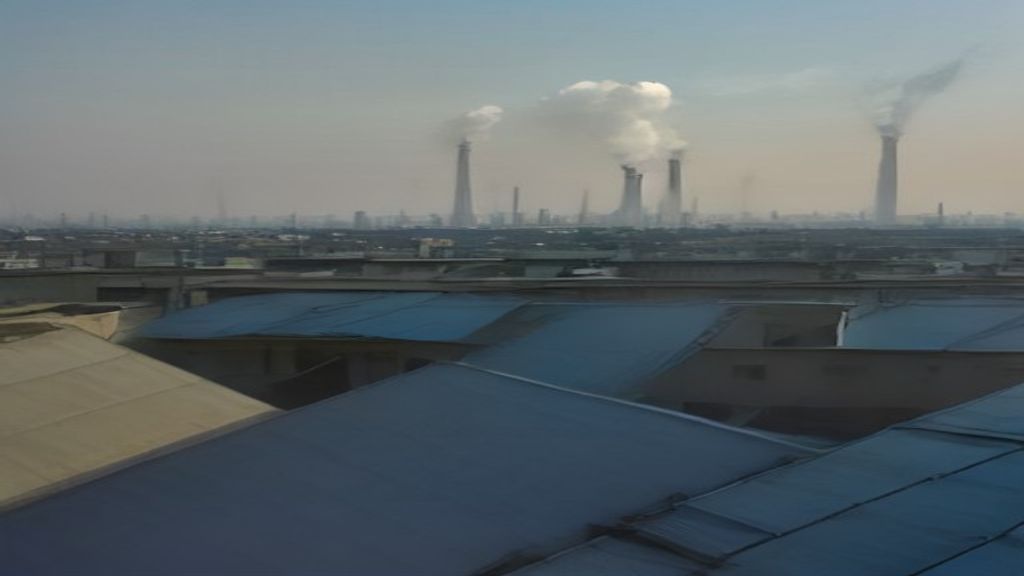
Pakistan's thermal power plants, gas, RLNG and coal, are most efficient when they run near full capacity. When they are forced to run at a fraction of their capacity, their fuel efficiency drops and each unit becomes more expensive to produce. That gap between expected and actual fuel cost is recovered through a **partial load adjustment charge**.
In simple terms:
- A plant designed to run at 100% is told to run at, say, 40%.
- Its "heat rate" worsens, so it burns more fuel per unit.
- The extra fuel cost is bundled into the FCA and billed to all consumers.
According to figures presented to NEPRA, partial loading charges reached roughly **Rs4.9 billion**, and in June 2026 they were about **Rs1 billion higher** than in the same month of 2025. That is a steep year-on-year jump.
Why CPPA is blaming daytime rooftop solar
This is the heart of the story. When NEPRA questioned the surge, CPPA-G explained that the charges were **not mainly caused by operational inefficiency**. Instead, they blamed a structural shift in demand.
Here is the chain of events:
1. Rooftop solar has exploded across homes, factories and shops. 2. During the day, all that solar power slashes demand from the national grid. 3. Big thermal plants are pushed down to partial load during sunny hours. 4. As the sun sets and solar output collapses, evening demand spikes. 5. Those same plants must ramp back up fast to cover the peak.
CPPA-G told the regulator the charges were driven by declining daytime grid demand due to the rapid growth of rooftop solar, not by inefficiency alone.
The system operator (ISMO) added a blunt point: simply switching plants off during solar hours would not fix it, because restarting them later triggers heavy **start-up costs** of their own. Either way, consumers pay.
So the "hidden charge" is really the cost of a grid that was built for steady thermal generation now trying to dance around a huge, weather-dependent solar wave it never planned for. This is Pakistan's version of the famous "duck curve" that California and Australia hit years ago.
How it inflates your bill
You do not see "partial load" on your bill, but you feel it through the **Fuel Charges Adjustment**. FCA is the monthly true-up between the fuel cost NEPRA assumed and what generation actually cost.
Recent examples show how quickly it moves:
- NEPRA allowed a **75 paisa per unit** FCA in August 2026 bills.
- For July, CPPA sought as much as **Rs2.50 per unit** to recover over Rs34 billion.
- Part of that recovery is exactly these partial loading costs.
| Cost element | Who is "blamed" | How you pay it | |---|---|---| | Partial load charge (~Rs4.9bn) | Daytime rooftop solar reducing grid demand | Rolled into monthly FCA | | Start-up / ramping cost | Evening solar drop-off | Rolled into FCA / capacity | | Reduced net-metering benefit | Net billing rules (Feb 2026) | Lower export rate on your own bill |
The uncomfortable irony: non-solar households, often lower-income families who cannot afford a system, help absorb costs attributed to solar adopters. And solar owners themselves still pay FCA on every grid unit they import.
The net billing shift makes this sting more
This charge does not exist in a vacuum. On **9 February 2026**, NEPRA replaced net metering with a **net billing** model for new solar consumers. The changes are significant:
- New buyback rate slashed to roughly **Rs8.13 per unit** (tied to the national average energy purchase price), down from the old **Rs25.32 per unit**.
- Exported units are no longer swapped one-for-one against imported units.
- Every imported unit is billed at full slab-based tariff, FCA included.
- The agreement term was cut from **7 years to 5 years**.
Existing net-metering consumers keep their older, more generous terms for now, another reason to understand exactly which regime your connection falls under. For a deeper walkthrough, see our guide on the net metering to net billing changes in Pakistan.
How solar owners should respond in 2026
The policy signal is clear: **exporting to the grid is no longer where the money is. Using your own solar is.** Here is a practical playbook.
- **Shift consumption into daylight hours.** Run washing machines, irons, pumps, RO plants and industrial loads between roughly 10am and 4pm when your panels are producing most.
- **Right-size the system.** Under net billing, a heavily oversized array that dumps cheap units to the grid at Rs8 makes little sense. Size closer to your daytime self-use.
- **Add battery or hybrid storage.** Storing midday surplus and discharging it during the expensive evening peak is now the single highest-value upgrade, because it also avoids the pricey ramp-up hours.
- **Automate loads.** Timers and smart plugs move discretionary usage into solar hours without you thinking about it.
- **Track your FCA.** Read the FCA line each month so you can see how much of your bill is fuel adjustment versus base tariff.
- **Consider self-consumption over export.** A system tuned to consume 80%+ of what it generates beats one built to sell surplus at the new low rate.
The blunt takeaway: solar is still one of the best defences against rising tariffs, but the winning strategy has flipped from **sell to the grid** to **consume it yourself and store the rest**. Our team's field experience across Pakistani installs confirms it, homeowners who added storage and shifted loads are the least exposed to both slab tariffs and these hidden adjustment charges.
Frequently Asked Questions
**What exactly is the partial load adjustment charge in Pakistan?** It is the extra fuel cost incurred when thermal power plants run below their efficient capacity. When plants operate at partial load, they burn more fuel per unit, and that surplus cost, about Rs4.9 billion recently, is recovered from consumers through the monthly Fuel Charges Adjustment.
**Is rooftop solar really to blame for higher electricity bills?** Not directly, but CPPA-G argues that surging daytime solar reduces grid demand and forces thermal plants into inefficient partial-load operation, then rapid evening ramp-ups. Those costs are then socialised across all consumers. Solar reduces your own import bill; the system-level cost is a grid-planning issue, not a fault of the panels.
**Will installing solar still save me money under net billing in 2026?** Yes, if you focus on self-consumption. With the buyback rate down near Rs8.13 per unit, exporting is far less rewarding, but every unit you use directly avoids full slab tariffs plus FCA. Pairing solar with a battery and shifting loads to daylight hours keeps solar strongly worthwhile.
**Do existing net-metering users lose their old rates?** No. Existing net-metering consumers continue on their previously applicable terms, including the older buyback rate. The new Rs8.13 buyback, five-year term and net-billing mechanism apply to new applicants after 9 February 2026.
The bottom line
The **partial load adjustment charge** is a real, growing cost, and it is being framed as a rooftop-solar problem while the bill lands on everyone. Understanding it changes how you should plan a system in 2026: build for self-consumption, add storage, and move your usage into the sun.
Solar is not the villain here, it is still your strongest hedge against Pakistan's climbing tariffs. Want a system sized for the net-billing era? Talk to Best Solar Company PK for a self-consumption-first design that protects you from both rising slabs and hidden adjustment charges.
Best Solar Company PK designs and installs reliable solar systems in Rawalpindi, Islamabad, Lahore, Multan, Taunsa Sharif and Karachi. Contact us for a free survey and the best advice for your home or business.