
- By Best Solar Company PK
- 26 Aug, 2026
- Energy Savings
- 8 min read
Every time a tanker is threatened near the Strait of Hormuz, Pakistani electricity bills feel the tremor weeks later. In 2026 that link has never been clearer. Rooftop **solar energy security** is no longer just about saving money, it is about shielding your home or business from oil price shocks decided thousands of kilometres away in the Gulf.
Pakistan imports the bulk of the fuel that powers its grid, so a barrel of crude that jumps in the Gulf becomes a higher unit rate on your bill. This article breaks down why solar has become the single most reliable hedge against imported-fuel volatility, with real PKR figures and the latest NEPRA rules.
Why Gulf Tensions Land on Your Electricity Bill
Roughly a fifth of the world's oil normally moves through the Strait of Hormuz. When conflict flared this year, flows through the strait collapsed from about 21.6 million barrels per day in late 2025 to just **4.9 million barrels per day** in the second quarter of 2026, according to the U.S. Energy Information Administration.
The price response was violent. Brent crude spiked above **$114 a barrel** in March, touched $105 in July, and has swung between $87 and $94 through August 2026 as ceasefire talks stall and restart. The EIA does not expect Middle East output to recover to pre-conflict levels until early 2027.
Pakistan cannot escape this. Furnace oil, diesel and imported LNG still feed a meaningful slice of national generation, and those fuels are priced in dollars. When crude climbs, two things happen at once:
- The **fuel cost adjustment (FCA)** on your monthly bill rises, passing global fuel prices straight to consumers.
- A weaker rupee makes every imported barrel more expensive in PKR terms, compounding the shock.
When your power comes from imported fuel, your budget is hostage to a shipping lane you will never see. Solar cuts that cord.
Solar Turns a Variable Cost Into a Fixed One
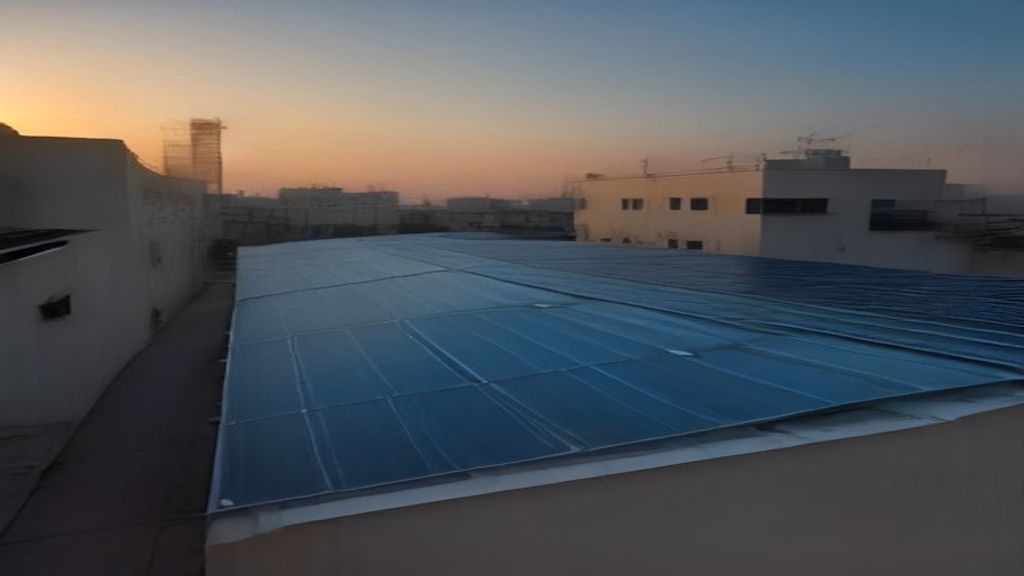
This is the heart of the energy-security argument. Grid electricity is a **variable cost** that moves with oil, the rupee and government tariff decisions. A solar system is a **fixed, one-time cost** that generates the same free sunlight in 2026, 2029 and 2036.
Pakistan's average power tariff crossed **Rs 47 per unit** in 2025, and residential slabs commonly sit in the Rs 30–48 range in 2026 depending on consumption. A 1-kanal home now routinely sees bills above Rs 40,000 a month. Every rupee of that is exposed to the next Gulf headline.
Solar removes that exposure for the units you generate yourself. You are effectively pre-paying for a decade of electricity at today's price and freezing it, no matter what happens to Brent crude.
The Real Numbers: What a System Costs in 2026
Here is a practical comparison for a typical mid-sized home or small business, based on current market rates in Pakistan.
| System type | Typical 2026 price (PKR) | Best for | Oil-shock protection | |---|---|---|---| | 10kW on-grid | 9.5–12 lakh | Daytime-heavy homes/offices | High during daylight | | 10kW hybrid + lithium battery | 14–17 lakh | 24/7 coverage, load-shedding | Highest, day and night | | 5kW on-grid | 5.5–7.5 lakh | Small homes | Moderate |
A 10kW on-grid system generating roughly 1,200–1,400 units a month can offset Rs 40,000–55,000 of billing at current tariffs. That points to a payback period of around **2.5 to 4 years**, after which the electricity is essentially free for the remaining 20-plus year panel life. As tariffs rise with future oil shocks, that payback only gets faster.
What Changed With NEPRA Net Billing in 2026
Be accurate about the rules, because they shifted this year. From **9 February 2026**, NEPRA replaced net metering with a **net billing** model under the Prosumer Regulations 2026.
The key differences for new applicants:
- Exported units are no longer swapped one-for-one against imported units.
- New consumers receive a buyback rate of about **Rs 8.13 per unit** for surplus exported to the grid, down sharply from the old Rs 25.32.
- Imported units are billed at the full prevailing tariff.
- Contracts run for **five years**.
The practical takeaway: the economics now reward **self-consumption**, not export. Size your system to match what you actually use during the day, and consider a hybrid battery so you store your own generation instead of selling it cheaply and buying it back expensively. This is a bigger reason than ever to get the sizing right with a professional. Our team at Best Solar Company PK can model your load profile before you buy.
Businesses Have the Most to Gain
For commercial users, energy is often the second or third largest cost line, and an oil-driven tariff spike can wipe out a quarter's margin overnight. Solar delivers three defensive benefits at once:
- **Predictable operating costs** that competitors relying on the grid cannot match.
- **Protection from load-shedding** when fuel shortages force cuts, using hybrid battery backup.
- **A visible sustainability credential** that increasingly matters to export buyers and lenders.
A factory or warehouse with large daytime consumption is close to the perfect solar candidate: the roof is big, the load matches the sun, and every unit self-consumed dodges both the tariff and the FCA.
An Original Tip: Watch the Fuel Charges Adjustment Line
Most homeowners only look at the total bill. The smarter move is to track the **FCA and quarterly tariff adjustment lines** month over month for the past year. That volatility is the exact risk solar eliminates. When you can see that a single Gulf flare-up added several rupees per unit to those lines, the case for locking in your own generation stops being abstract and becomes a number on paper.
Frequently Asked Questions
**Does rooftop solar really protect me from oil price shocks?** Yes, for the electricity you generate and consume yourself. Grid power carries fuel cost adjustments tied to imported oil and LNG, while your solar output has zero fuel input. The larger your self-consumption, the more insulated you are from Gulf-driven price swings.
**Is solar still worth it after NEPRA switched to net billing in 2026?** Absolutely, but the strategy changed. Because the new buyback rate is only about Rs 8.13 per unit, the value now comes from using your own power rather than exporting it. A correctly sized system, often with a battery, still pays back in roughly 3–4 years at current tariffs.
**How much does a 10kW solar system cost in Pakistan in 2026?** An on-grid 10kW system typically runs PKR 9.5–12 lakh, while a hybrid system with lithium battery backup costs around PKR 14–17 lakh, depending on panel and inverter brand.
**Should I add a battery given today's rules?** For most homes and businesses, yes. A battery lets you store daytime generation and use it at night instead of exporting cheaply and buying back at the full tariff. It also gives you power during load-shedding caused by fuel shortages.
Conclusion
The Strait of Hormuz will keep making headlines, and each one is a reminder that grid power in Pakistan is only as stable as a distant shipping lane. Rooftop solar flips that dependency: it converts a volatile, dollar-linked, oil-exposed bill into a fixed asset you own. In 2026, that is the definition of **solar energy security**.
Ready to price your protection against the next oil shock? Contact Best Solar Company PK for a free load assessment and a system sized to keep your bills flat, whatever crude does next.
Best Solar Company PK designs and installs reliable solar systems in Rawalpindi, Islamabad, Lahore, Multan, Taunsa Sharif and Karachi. Contact us for a free survey and the best advice for your home or business.