
- By Best Solar Company PK
- 21 Jul, 2026
- Energy Savings
- 8 min read
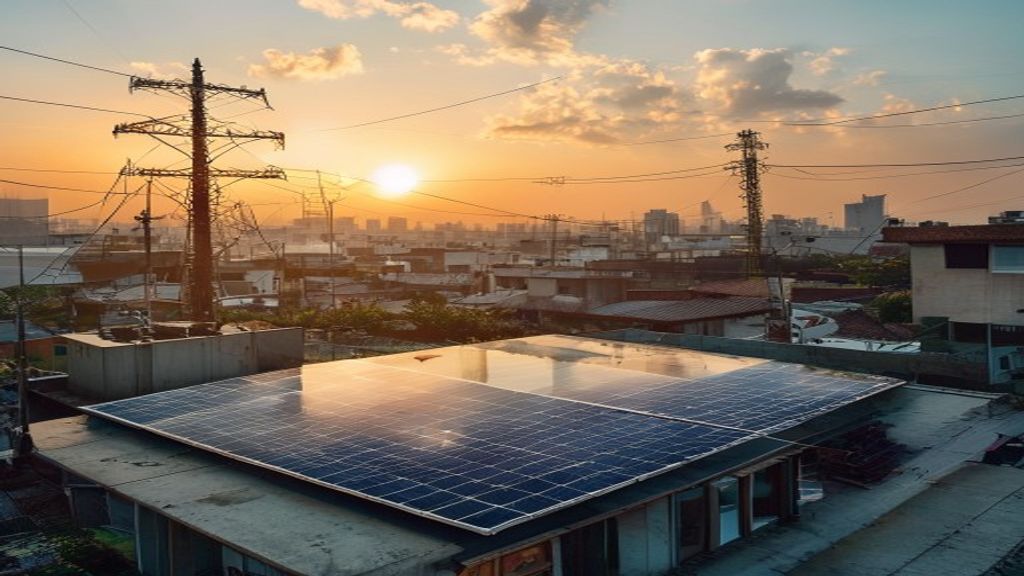
For years, the dream sold to Pakistani homeowners was simple: install rooftop solar, export your surplus, and watch your electricity bill fall to zero — maybe even go into credit. From February 2026, that dream has a hard floor under it. Under new NEPRA rules, every domestic and three-phase connection now carries a **fixed monthly charge of Rs200 to Rs675**, and this charge applies whether you draw one unit from the grid or none at all.
If you have solar, the maths is now blunt: your energy charges can shrink to almost nothing, but your bill cannot hit zero. Here is exactly why, what it costs, and how to keep the damage small.
What actually changed in February 2026
NEPRA notified the new fixed-charge structure for domestic consumers effective mid-February 2026, and the amounts began appearing on February and March billing cycles across all DISCOs (LESCO, MEPCO, IESCO, GEPCO, K-Electric and others).
The key point most people miss: this is a **fixed charge, not a per-unit charge**. It is levied for the privilege of being connected to the grid — to cover poles, wires, transformers and staff — regardless of how much electricity you consume. Solar simply cannot offset it, because solar reduces *units*, not the *connection fee*.
For ordinary domestic (single-phase) consumers, the charge is tied to your monthly consumption slab:
- Up to 100 units: **Rs200 (protected) / Rs275 (unprotected)**
- 101–200 units: **Rs300**
- 201–300 units: **Rs350**
- 301–400 units: **Rs400**
- 401–500 units: **Rs500**
- 501 units and above: **Rs675**
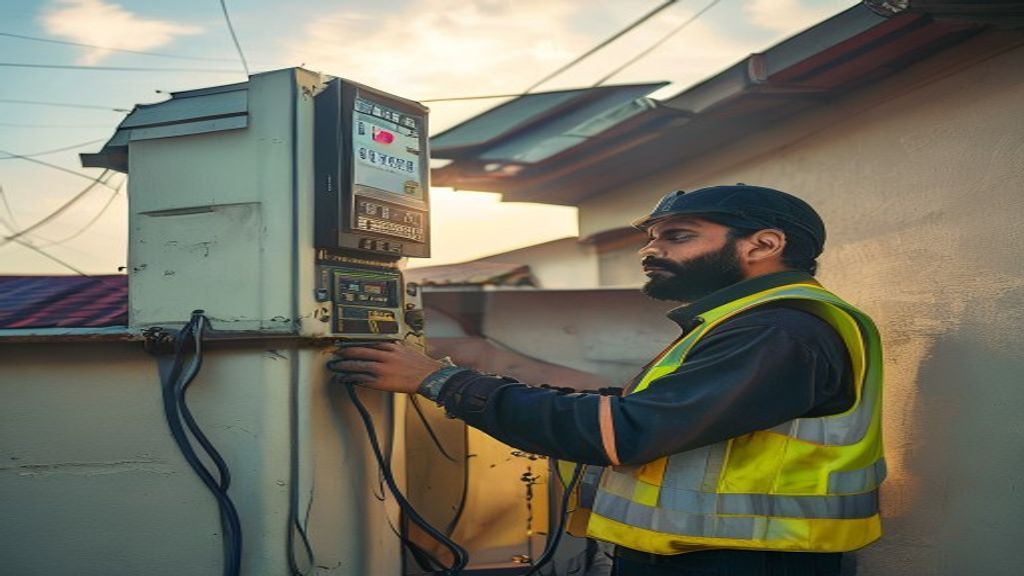
For **three-phase and Time-of-Use (ToU) consumers** — which is where most solar homes and all commercial solar sits — the rule is harsher. The charge is **Rs675 per kW per month**, applied to whichever is higher: 50% of your sanctioned load, or your Maximum Demand Indicator (MDI) recorded that month.
The trap for solar owners is the sanctioned load. Your fixed charge is calculated on the capacity your meter is rated for — not on the tiny amount you actually pull from the grid after your panels do their work.
What this costs a real solar home
Let's translate the Rs675/kW figure into rupees for common three-phase loads:
- **5 kW sanctioned load:** billed on ~2.5 kW (50%) → roughly **Rs1,687/month**
- **8 kW load:** ~4 kW billed → roughly **Rs2,700/month**
- **10 kW load:** ~5 kW billed → roughly **Rs3,375/month**
- **15 kW load:** ~7.5 kW billed → roughly **Rs5,062/month**
So a home with a 10 kW three-phase connection and a fully offsetting solar system that used to see a near-zero or credit bill will now receive a bill of **at least Rs3,375 every single month** — around **Rs40,500 a year** — before a single unit of energy charge, taxes or TV fee is added.
For a modest single-phase household under 200 units, the hit is smaller: **Rs200–Rs300 a month**. Annoying, but manageable. It is the three-phase and larger solar homes that feel this most.
Why solar households are hit hardest
The timing is not a coincidence. NEPRA's own reasoning is candid: as more homes install rooftop solar and stop buying grid units, the DISCOs' per-unit revenue falls — but the fixed cost of running the grid does not. The fixed charge is designed to recover that cost from everyone still connected, and solar homes are precisely the ones who had driven their variable bills toward zero.
This lands on top of the **net billing shift** that took effect in the same window. New solar connections registered after 9 February 2026 no longer enjoy 1:1 unit netting. Instead, exported units are bought back at a reduced rate — around **Rs11 per unit** (and lower in some approvals), on a five-year contract — while every imported unit is charged at full slab tariff. Existing net-metering licence holders keep their old 1:1 arrangement until their seven-year contract expires. If you want the full picture on that change, see our guide to the new net billing rules.
Combine the two and the message is clear: the era of the "zero bill" solar home is over. The new goal is a *minimised* bill.
How to minimise the fixed charge
You cannot escape the fixed charge entirely while staying grid-connected — but you can stop overpaying it.
- **Right-size your sanctioned load.** This is the single biggest lever. If your connection is rated for 15 kW but your real peak demand is 7–8 kW, you are paying Rs675/kW on capacity you never use. Apply to your DISCO to **reduce your sanctioned load** and your fixed charge drops proportionally.
- **Reconsider three-phase if you don't need it.** Three-phase meters carry higher minimum charges (Rs150 minimum vs Rs75 for single-phase) and the per-kW structure. If your household load genuinely fits single-phase, converting can cut both the fixed charge and the ToU exposure.
- **Watch your consumption slab (single-phase homes).** Because the domestic charge steps up by slab, keeping monthly usage under 200 or 300 units holds you at Rs300–Rs350 instead of Rs675. Efficient appliances and load-shifting to daylight solar hours help you stay in the lower band.
- **Manage your MDI.** For ToU/three-phase, the charge uses the *higher* of 50% sanctioned load or your MDI. Avoid switching on every heavy appliance — AC, motor, pump, oven — simultaneously. Staggering big loads keeps your MDI down so the 50%-of-load figure governs instead.
- **Add battery storage strategically.** Batteries won't remove the fixed charge, but by shifting your grid draw and lowering peak demand they help control MDI and let you buy fewer expensive night units at full tariff. See our home battery sizing guide before you invest.
- **Confirm your protected/lifeline status.** Lifeline consumers saw no change, and protected consumers pay the lower end of the scale. Make sure your category is correctly recorded on your bill.
The bottom line
Solar still makes overwhelming financial sense in Pakistan — grid tariffs remain high, and offsetting your energy charges is where the real savings live. What has changed is expectation management: budget for a **fixed monthly floor of Rs200 to a few thousand rupees**, right-size your load so you don't pay for capacity you don't use, and design your system around net billing rather than the old net metering dream. The bill won't be zero, but with the right setup it can still be a fraction of your neighbour's.
Frequently Asked Questions
**Does the fixed charge apply even if my solar produces more than I use?** Yes. The fixed charge is for grid connection, not consumption. Even if you export more units than you import, you still pay Rs200–Rs675 (single-phase) or Rs675 per kW of billed load (three-phase). It cannot be offset by solar generation or export credits.
**Can I avoid the fixed charge by going fully off-grid?** Only by disconnecting from the grid entirely — surrendering your meter and relying on solar plus batteries alone. For most homes that means costly battery banks and no grid backup, which rarely pays off. Staying connected and minimising your sanctioned load is usually the smarter route.
**I already have net metering. Am I affected?** The fixed monthly charge applies to all connected consumers, including existing net-metering users. However, your 1:1 unit-netting and original buyback terms remain protected until your seven-year licence contract expires. Only new connections after 9 February 2026 move to net billing.
**How is the Rs675 per kW calculated for my three-phase meter?** Your DISCO takes the higher of (a) 50% of your sanctioned load or (b) your recorded Maximum Demand Indicator for the month, then multiplies by Rs675. Reducing your sanctioned load or controlling peak demand directly lowers this figure.
**Are lifeline and low-usage consumers exempt?** Lifeline consumers saw no change to their charges. Protected domestic consumers and those using under 100–200 units pay the lowest slabs (Rs200–Rs300), so keeping consumption low genuinely reduces what you owe.
Best Solar Company PK designs and installs reliable solar systems in Rawalpindi, Islamabad, Lahore, Multan, Taunsa Sharif and Karachi. Contact us for a free survey and the best advice for your home or business.