
- By Best Solar Company PK
- 27 Aug, 2026
- Solar Guides
- 8 min read
For years, Pakistan's electricity story was about not having enough. In 2026, the script has flipped. Federal Energy Minister Sardar Awais Ahmad Khan Leghari confirmed in August 2026 that the country's **power challenge has shifted from generation to storage** — a change that has huge consequences for every homeowner and business running solar in Pakistan.
His words were blunt: "Pakistan does not have a generation problem anymore. In many hours of the day, we have a surplus. What we have is a flexibility problem." Renewables now make up around 55% of the national electricity mix, and the government is targeting 90% clean energy by 2035.
So if generation is no longer the issue, why do so many neighbourhoods still see load-shedding after sunset? The answer is the exact reason a **solar battery is now essential** in Pakistan — and this guide explains it in plain terms, with real 2026 PKR figures.
The Daytime Solar Flood, The Nighttime Crunch
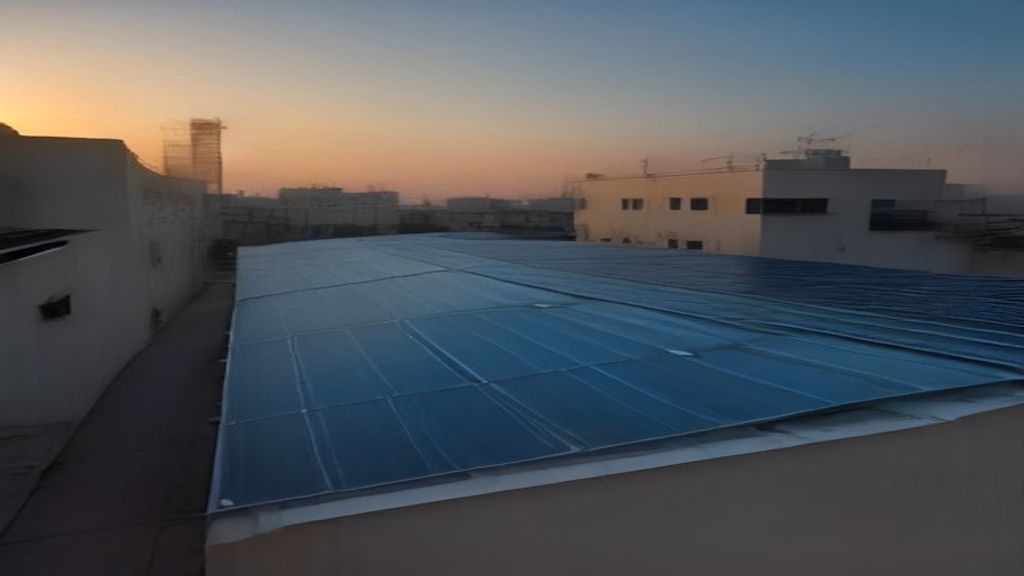
Millions of rooftops across Lahore, Karachi, Faisalabad and beyond now pump electricity into the grid at midday. So much, in fact, that at peak sun hours the grid has more supply than it can use.
But solar output collapses the moment the sun goes down — right as households switch on lights, fans, ACs and TVs. Demand peaks after sunset; generation from solar drops to zero. The grid is left scrambling to cover the evening ramp with expensive thermal plants, and where that fails, the result is familiar: load-shedding.
This mismatch is what the minister calls a *flexibility problem*. The country is not short of energy — it is short of a way to move cheap midday solar into the expensive evening hours. That "way" is storage.
Pakistan no longer has a generation shortage. It has a timing problem — and a battery is the tool that fixes timing.
Why This Directly Affects Your Solar Savings
Here is where it gets personal for solar owners. Under the old **net metering** system, your daytime surplus was banked against the grid almost unit-for-unit — the grid effectively acted as your free battery. That era is ending.
NEPRA's new **Prosumer Regulations 2026** replaced net metering with **net billing**. The difference is stark:
- **Export** (the surplus you send to the grid) is now paid at a low buyback rate — reported around **Rs 11 per unit**, and for some new consumers even lower.
- **Import** (the power you pull back at night) is charged at the **full retail rate of roughly Rs 55–65 per unit**.
That gap — selling low, buying high — destroys the economics of exporting your daytime surplus. Every unit you sell for Rs 11 and buy back for Rs 60 is a Rs 49 loss you are handing to the grid.
If you have a valid net metering agreement dated on or before **9 February 2026**, you are grandfathered onto the old terms until your contract expires. Everyone else — and every new installation — faces net billing. (See our net metering vs net billing guide for the full breakdown.)
The strategic response is obvious: **stop exporting cheap and start storing.** Keep your own solar units, use them yourself at night, and buy far less from the grid at Rs 60.
What a Battery Costs in Pakistan (2026 Prices)
The good news is that lithium storage has become dramatically more affordable. Modern **LiFePO4 (lithium iron phosphate)** batteries have largely replaced old lead-acid and tubular units for serious solar homes.
Here is a realistic snapshot of the 2026 market:
| Battery type / size | Typical capacity | Price range (PKR) | |---|---|---| | Lithium LiFePO4 (48V/51.2V, 100Ah) | ~5 kWh | Rs 185,000 – 310,000 | | Mid-range lithium (Dyness, Knox) | ~5 kWh | Rs 227,000 – 260,000 | | Premium lithium (Pylontech, GoodWe) | ~5 kWh | Rs 285,000 – 370,000 | | Per-kWh benchmark | 1 kWh | Rs 40,000 – 55,000 |
A typical home wanting to cover essential evening loads — fans, lights, a fridge, some outlets — usually starts with 5–10 kWh of storage. A household running ACs into the night will want more.
**Original tip from our installs:** don't oversize on day one. Size your battery to your *evening* consumption between roughly 6 pm and midnight, not your whole day. In most Pakistani homes, one well-chosen 5–10 kWh lithium bank covers the painful post-sunset peak, delivers the fastest payback, and can be expanded later as budgets allow.
Battery vs No Battery: The Real Numbers
Consider a home generating 10 surplus units a day.
- **Exporting under net billing:** 10 units × Rs 11 = **Rs 110/day** earned, but those same units cost Rs 55–65 each to buy back at night.
- **Storing and self-using:** those 10 units offset Rs 55–65 of grid purchases = **Rs 550–650/day** in avoided cost.
That is a five-to-six-times difference in value for the exact same solar energy. Over a month, storing rather than exporting can be worth **Rs 15,000–19,000** to an average solar household — before you even count the value of keeping the lights on during load-shedding.
The battery also delivers something no tariff can price: **uninterrupted power** through evening outages, no noisy generator, no fuel cost.
How to Add Storage the Smart Way
If you already have solar, or are installing fresh, here is the practical path:
- **Choose a hybrid inverter.** It manages panels, battery and grid together. If you have an old grid-tie inverter, budget to replace or supplement it.
- **Prioritise LiFePO4 chemistry.** It offers longer cycle life (often 6,000+ cycles), better safety, and deeper usable capacity than lead-acid.
- **Match voltage and BMS quality**, not just the sticker price — a cheap battery with a weak Battery Management System is a false economy.
- **Insist on a real warranty** (5–10 years) and a local service presence.
For homeowners weighing a full system, our complete home solar guide walks through panel, inverter and battery sizing together.
Frequently Asked Questions
**Is a solar battery really essential now, or just a nice-to-have?** Under 2026 net billing rules, the financial case has flipped decisively toward storage. Because you sell surplus for around Rs 11 and buy back at Rs 55–65, self-consuming your own stored solar at night is worth five to six times more than exporting it. Combined with ongoing evening load-shedding, a battery has moved from luxury to near-essential for most solar owners.
**Will the government subsidise or manufacture batteries locally?** The minister has stated the government wants to build a domestic battery manufacturing industry rather than rely only on imports, and battery energy storage systems (BESS) are central to the national plan. As of August 2026 no broad household battery subsidy has been confirmed, so plan your purchase on current market prices.
**How big a battery do I need for a normal home?** Most Pakistani households start with 5–10 kWh of lithium storage to cover essential evening loads. Homes running air conditioners through the night typically need more. Size it around your 6 pm–midnight consumption for the best payback, then expand later.
**What happens to my existing net metering agreement?** If your net metering agreement was valid on or before 9 February 2026, you are grandfathered onto the older, more favourable terms until that agreement expires. New and future installations fall under net billing, which is why adding storage now protects your savings.
The Bottom Line
Pakistan's power problem is no longer about producing electricity — it is about *storing* it for when the sun isn't shining. The minister's message and NEPRA's net billing shift point in the same direction: the grid will pay you little for daytime surplus and charge you heavily at night.
A **solar battery** turns that trap into an advantage, letting you keep and use your own clean power exactly when it's most valuable. In 2026, storage isn't just the country's bottleneck — solving it in your own home is one of the smartest energy investments you can make.
Ready to add storage to your system? Talk to our team for a battery sizing assessment built around your evening load.
**Sources:** Arab News — power challenge shifted to storage · ProPakistani — solar owners must help keep grid stable at night · NEPRA Prosumer Regulations 2026 coverage, The Express Tribune
Best Solar Company PK designs and installs reliable solar systems in Rawalpindi, Islamabad, Lahore, Multan, Taunsa Sharif and Karachi. Contact us for a free survey and the best advice for your home or business.